Tag Archives: Writing

Author Patricia Engel Shares Writing Process and Advice During Campus Visit

Author Patricia Engel visited Widener’s Main Campus Oct. 18 and 19 as a part of the English and creative writing department’s Distinguished Writers Series. The visit, scheduled after the recent publication of her novel and New York Times Editors’ Choice, “The Veins of the Ocean,” gave students the opportunity to question Engel about her writing process.

“Sometimes I have a sense of where the story is going, but it changes,” she said. “Once you lay down the groundwork for a story, the story starts to speak to you, and you have to give it that freedom to go where it wants to go.”

Published by Grove Press in May of 2016, “The Veins of the Ocean” details a “riveting story of a young woman’s journey away from her family’s painful past towards redemption and a freer future.”

Prior to “The Veins of the Ocean,” Engel published two other novels with Grove Press, including “Vida” in 2010 and “It’s Not Love, It’s Just Paris” in 2013. She also has work appearing in the New York Times, The Atlantic, A Public Space, Boston Review and Harvard Review, among other publications.

“Each book is its own animal,” Engel said. “As I’m beginning a project, I really have to listen to it and feel what its needs are. Very often I have to change as a writer and as a person to meet those needs.”

Engel has already started thinking about her next novel focusing on a much broader and bigger family saga, though it is still considered to be in the very early stages. It will include similar themes to her previous novels, highlighting an interest in family and immigration.

“In order for me to actually finish writing a book, I have to be obsessed with it,” Engel said. “When it comes down to books that I think people love, that stay with them, that you remember years after years, it’s not a sentence, it’s not an image, it’s not a character, it’s the feeling that the book left you with. That’s what I aim for.”

Words of Wisdom for Widener’s Young Authors

During her Widener visit, Engel individually met with several students for tutorials and visited creative writing and English classes on campus.

“Having someone from a totally different background come in and look at my story offers new perspective I wouldn’t otherwise have,” said Kelsey Styles, a senior communication studies and creative writing major who met one-on-one with Engel.

The author concluded her Widener visit with a public reading of an excerpt from “The Veins of the Ocean.” She also answered questions. Speaking to aspiring writers, Engel emphasized, “Read absolutely everything you can get your hands on. Seek out books nobody is telling you to read. Feed your creative spirit in different ways. You have to be diligent about showing up for your writing. There’s a lot to be said for daydreaming, but it’s worthless if you don’t get it on a page.”


Written by Carlie Sisco

Content and image originally published by “What’s Up @ Widener.”
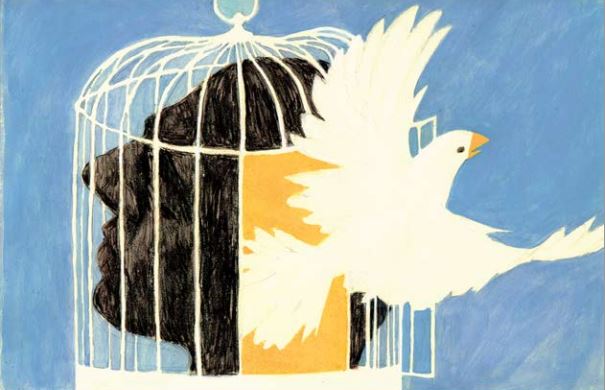
Raison D’écrire—Why Writers Write

screenshot_cover photo

There is a debate in the writing world over whether it is best to write for oneself, or for an audience. Writing for the self is often viewed as the more artistic approach, usually for the purpose of self-expression. Writing for an audience, on the other hand, while seen as an excellent way to target a certain group of people and build a fan base, is sometimes viewed as “selling out,” as if writers only do this to make money. There are countless examples to show that this is an enormous oversimplification. I’ve actually been fortunate enough to have participated in the publication of a work that provides a fascinating answer to the question of why people write as a typist and co-editor.

The book in question is Letters to My Younger Self, a collection of writing by incarcerated men at Graterford prison, and it took several years to create. It all began when Professor Jayne Thompson, who teaches Creative Writing at Widener University, started to teach a writing class at Graterford prison, a maximum security men’s prison in Graterford, Pennsylvania. The men wrote insightfully, with powerful poetry, prose, and letters addressed to their younger selves, covering topics such as home, family, decisions, and prison.

In addition to her classes at the prison and at Widener, Professor Thompson taught some classes at Chester High School and heard the cases of juvenile first offenders in Chester, PA. Time after time, she watched her students disappear into the criminal justice system, and then heard cases from others of the same age who were also falling into lives of crime. She mentioned this to the men at the prison, and they expressed deep concern for those young people, who reminded them of themselves when they were younger, and together they came up with an idea for a book of their writing as a way to address this problem.

I was able to visit the prison for the first time a few weeks ago, and I was deeply moved by their reasons for writing, as well as their reasons for sharing their work. The men, many of them fathers themselves, expressed a desire to reach out to those young people in some way. They feel that they have failed the younger generations by making choices that led to their incarceration, because now they aren’t there to support, guide, and encourage those youngsters in a way that might be beneficial to them. They feel this responsibility not just for their own children, but for any children whose lives they might have influenced in a positive way if they were living free lives themselves. They are attempting to make up for that absence with their writing. More than anything, they encouraged their young readers to get an education, and to choose their friends wisely.

Clearly, the works in this book were written with an audience in mind, but not for financial reasons. The book can be purchased on Amazon, but the money from each purchase of the book goes to a fund for putting it in the hands of its target audience: at-risk youth. The men did not write for fame any more than for fortune, as the prison requested that their last names not be given, so only their first names and last initials are displayed beside each piece.

Are they writing for self-expression then? There are definitely elements of that, as they share many personal experiences that they feel led them to where they are now, and they may have felt some closure as they reflected in this way, but that is just one part of the picture. Ultimately, I’ve found that writers write for a myriad of reasons, and who is to say that one is better than another? This book is an excellent example of why writing for a particular audience does not necessarily imply selfish intent. In this case, it is an effort to bring about change.

To learn more about this book, and to hear some recordings of the men reading their work, check out this segment of Radio Times with Marty Moss-Coane.

by Emily DeFreitas

The FUSE Conference: Uniting Literary Journals Across the Nation

The gathering of undergraduate editors at the 2014 FUSE conference at Bennington College in Bennington, VT.

The gathering of undergraduate editors at the 2014 FUSE conference at Bennington College in Bennington, VT.

The FUSE conference, which took place at Bennington College in Vermont this November, was a unique opportunity to interact with like-minded people who aim to produce excellent literary journals. FUSE, or the Forum for Undergraduate Student Editors, is a national organization that serves to connect student editors from schools across the nation, giving them the chance to share ideas, offer advice, and support each other in their endeavors.

The conference consisted of presentations by students, faculty, and guest speakers about editing, publishing, and other general concepts related to creating a literary journal with undergraduates. There was also time set aside for attendees to take a look at the various journals being represented, and to show their own.

DSC00238 (2)

Autumn Heisler, editor-in-chief of Widener Ink (left) and Emily DeFreitas, editor-in-chief of The Blue Route (right) present on community outreach during the conference.

While there, I had the opportunity to take part in a presentation on community outreach, but more importantly, I was able to listen to the thoughts, ideas, and strategies of other literary journals. I came out of the event with a substantial list of things The Blue Route staff should consider doing in the future, and I suspect that editors from other schools did as well. As one of the speakers pointed out, the main competition for a literary journal isn’t other literary journals. In reality, we compete with the distractions of the electronic world around us as we attempt to reel in readers. Because of this, having a network through which we can promote each other, encourage readership, and improve the individual journals we’re producing is an extremely valuable thing.

Some of the ideas presented were not necessarily specific to literary journals alone. Some might be well applied to groups like Widener’s own English Club. Students talked about write-ins, open mics, and blind dates with books, all of which are fantastic ways to participate in the literary world, building a reading and writing community in person, not just online or on paper. This conference was meant to assist in building that community. Throughout the event it became clear that there are many ways to do that, and literary journals play an important role.

by Emily DeFreitas

Does your school have a literary journal? Are you interested in learning more about FUSE? Check out their website at http://www.fuse-national.com/

Collaboration at its Finest: A Review of Goddard College’s Literary Journal “Duende”:

Producing a literary journal is a task that requires not only great time and effort, but also a group of people dedicated to collaborating to create the best collection of poetry, prose, and other works possible. This idea of collaboration is one that the students in the Writing program at Goddard College latched onto to produce their first edition of the literary journal “Duende,” out last month, and the results are amazing.

Duende is a product of collaboration on a national level. Unlike most undergraduate literary journals, which are run by students from one campus, this journal’s staff are located all across the United States, from Oregon to Pennsylvania and everywhere in between. The staff only meets face to face once each semester; I can only imagine how tricky communicating about a complex piece of poetry is without that in-person dynamic!

A quote by Federico Garcia Lorca appears at the bottom of the artfully designed home page, explaining that duende “is a force…of a style that’s truly alive: meaning, it’s of the veins: meaning, it’s of the most ancient culture of immediate creation”. This simple philosophy of collecting and sharing works of art teeming with raw soul and passion made me eager to explore their first issue to see exactly the kinds of works desired by Duende’s editors.

Within the visual art category, I was most enthralled by Deanna Lee’s collection of hand-drawn pieces rooted in the exploration of the line. Lee shows that groupings of abstract lines can both evoke contrasting characteristics (weightlessness vs. heaviness, for example) while all maintaining a sense of life and action. I love the sense of movement in Lee’s work, and every time I look back at these three drawings, I feel as if they’ve moved somehow, shifted as my perspective on them shifts.

Switching to the prose section of the journal, another interesting aspect of Duende’s collaborative spirit is unveiled. Categories like “prose poem” and “hybrid prose”  are attached to these varying works. I love Duende’s philosophy that regardless of genre, good writing is good writing and needs to be shared. My favorite work in this prose section is Justin Torres’ flash-fiction piece. Beautiful diction juxtaposed against edgy, sometimes jolting scenes, Torres’ concise story needs to be read more than once in order to pick up on all the social and moral issues presented.

Duende tells that they are “especially interested in collaborations between two or more writers, or between writers and visual artists”, and my favorite piece in the poetry section involved both visual and written art. The prose-poem This is How We Dream and its accompanying artwork present an interesting pair of works to be compared and contrasted. Pairing pieces of art together is a tricky thing to do in order to emphasize the best parts of each work, but I find the contrasting colors of the visual art and the theme of dream versus reality in the poem to work incredibly well together.

Coming together for the sake of promoting written and visual art is the goal of most every literary journal produced by undergraduates, but Duende does it exceptionally well. Uniting students nationwide through Goddard College’s Writing program, combining genres of work to create bold new styles, and encouraging artists of various mediums to work together, Duende is a truly innovative journal that I cannot wait to hear more from.