Tag Archives: Literature

It’s Happening Again…Books Every ‘Twin Peaks’ Fan Should Read

After 25 years, Mark Frost and David Lynch’s Twin Peaks returns to television with an 18-part third season. The two-hour premiere debuts on Showtime May, 21 at 9 PM ET/PT. Details on the revival have remained a mystery, but fans can expect to see a great deal of the original cast returning to reprise their roles, including Kyle Maclachlan as Agent Dale Cooper.

If you love Twin Peaks and you’re looking for some new summer reading material, Lincoln Michel has compiled a list of books, both wonderful and strange, that capture the “Twin Peaks feel.”

Check out Michel’s recommendations here!

There are also numerous books dedicated the televisions series itself. If you’d prefer to read within or about the world of Twin Peaks check out this list of official and unofficial releases!


5 Facts About Zelda Fitzgerald

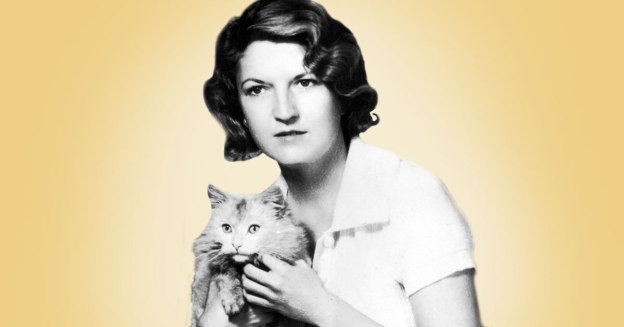
On Friday, January 27, Amazon Prime Video will be releasing a 10-episode bio-series on the life of writer and icon Zelda Sayre Fitzgerald. The Amazon Original, titled “Z: The Beginning of Everything,” stars Christina Ricci as Zelda Fitzgerald and follows the Southern Belle turned flapper on a wild ride through the Jazz Age.

The series, loosely based on Therese Anne Fowler’s Z: A Novel of Zelda Fitzgerald, gives Zelda the spotlight instead of her husband and acclaimed novelist, F. Scott Fitzgerald (David Hoflin). While the series recounts the romance and the turmoil, it also allows attention to be on the immensely talented, ambitious, daring individual that inspired countless heroines. Before she has her chance to shine, here are some interesting facts about Zelda Fitzgerald.

1. Zelda was a rebellious, free spirit

Named after Robert Edward Francillon’s gypsy heroine in the short story “Zelda’s Fortune,” Zelda Sayre was the pinnacle of rebellion in her hometown of Montgomery, Alabama, often sneaking out and anxious to be on her own.  After her high school graduation, Zelda’s live-for-the-moment spirit shined when she wrote: “Why should all life be work, when we can all borrow? Let’s think only of today, and not worry about tomorrow.”

2. Zelda and F. Scott Fitzgerald frequently stole from one another

They stole ideas that is. There was no question that Zelda was her husband’s muse. Several of Fitzgerald’s heroines were based on Zelda as well as the couple’s interactions and experiences. In The Great Gatsby, for example, Fitzgerald wrote Jay Gatsby’s first encounter with Daisy Buchanan to fictionalize his own first encounter with Zelda. However, eventually the line has to be drawn, especially when lifting diary entries nearly verbatim. According to The New York Times, Fitzgerald often drew “freely from Zelda’s diaries, letters and experiences…for his own work.”

Zelda fought back and within two months her autobiographical novel, Save Me the Waltz, was published detailing such themes as “a married couple in free-fall; a wife hospitalized.” Fitzgerald later accused her of stealing the ideas he was going to use in Tender Is the Night as well as the name of a previous character.

3. Zelda was an artist

In addition to being a strong writer, Zelda Fitzgerald was also a gifted artist. In 1996, her granddaughter, Eleanor Anne Lanahan, compiled 140 illustrations and 80 paintings all done by her grandmother into Zelda: An Illustrated Life: The Private World of Zelda Fitzgerald. Her artwork includes paper dolls crafted for her daughter, Scottie, illustrations from Lewis Carroll’s Alice in Wonderland, and many scenes from New York City where she resided with Fitzgerald for some time.

4. Zelda was a ballet dancer

Adding to her list of talents, Zelda decided to pursue ballet with acclaimed Russian dancer, Madame Lubov Egorova. Though nearing her 30’s, Zelda was determined to reach professional standards, the pursuit becoming an obsession. She practiced for hours to reach perfection until ultimately suffering from a mental collapse.

5. In 1948, Zelda was killed in a fire

Following her mental collapse in 1930, Zelda was in and out of facilities for mental illness. She was maintaining residence at Highland Hospital in Ashville, North Carolina when a fire broke out March 10, 1948. Zelda and eight other women were killed. She was laid to rest with Fitzgerald who passed in 1940 from a heart attack. Inscribed on their tomb is the very last line of The Great Gatsby. It reads:

“So we beat on, boats against the current, borne back ceaselessly into the past.”

Written by Carlie Sisco


A Scary Good Read: Mary Shelley’s Frankenstein; or, the Modern Prometheus

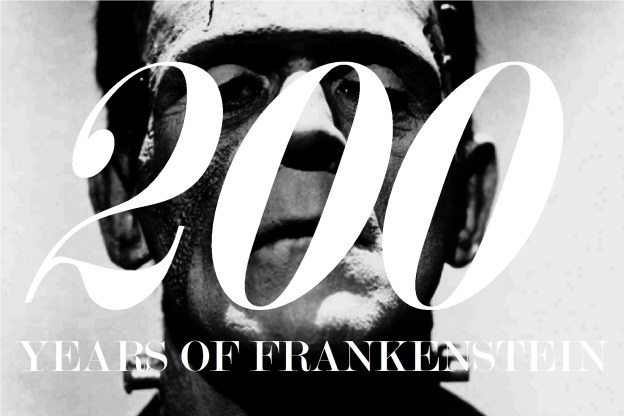
2016 marks the 200th anniversary of the Haunted Summer; the summer of 1816 that Lord Byron, Claire Clairmont, John Polidori, Percy Bysshe Shelley, and Mary Wollstonecraft Godwin (later Mary Shelley) spent together at Lake Geneva. The group took refuge from the poor weather one rainy June day in the Villa Diodati. Back then they didn’t have Netflix or the internet to occupy their time, so what better activity for a group of intelligent, creative, bored minds to do than write?

Lord Byron challenged each person in the group to compose a ghost story. Despite Byron and P.B. Shelley being well-established writers of the time, they attempted the challenge with little success. Polidori, Byron’s personal physician, would later write The Vampyre, which was then revisited by Bram Stoker’s Dracula. Mary, however, was struck by inspiration. That haunted night gave birth to one of the most iconic, well-known, thought-provoking tales of all time: Mary Shelley’s Frankenstein; or, the Modern Prometheus. She was only 18 years old during the Haunted Summer and 20 when her novel was published in 1818.

 frankenstein-tl

The first edition left the author anonymous causing many people to attribute the novel to Mary’s father, William Godwin, an influential philosopher of the time (and whose ideals influenced the plot of the novel). The second edition, published in 1822, gave Mary the credit she deserved. Several more editions were published both during and after her lifetime.

It’s difficult, if not impossible, to list all the adaptations and creations that Frankenstein has influenced for the past 200 years. Literature, film, plays, television, and dance are just a few mediums by which people have explored the beloved story. In his book, The Detached Retina: Aspects of SF and Fantasy, writer and anthology editor Brian Aldiss supports the claim that Frankenstein is a progenitor of the science fiction genre and counts the novel as an ancestor of future works by the famous science fiction writer, H.G. Wells.

From a literary standpoint, the structure, flow, characterization, plot, and themes of this novel are so complex and interesting that people are still analyzing it today. Mary Shelley’s talent can be overshadowed by the success of her husband, Percy Bysshe Shelley, and the works of the male-dominated canon, but it is important to remember this incredible novel and its importance to literary and world history. So, if you’re looking for a spooky read this Halloween, pick up Mary Shelley’s Frankenstein; or, the Modern Prometheus. I promise I’m not tricking you—this book is a real treat!

Written by Jennifer Rohrbach.

2016 Banned Books Week Begins!


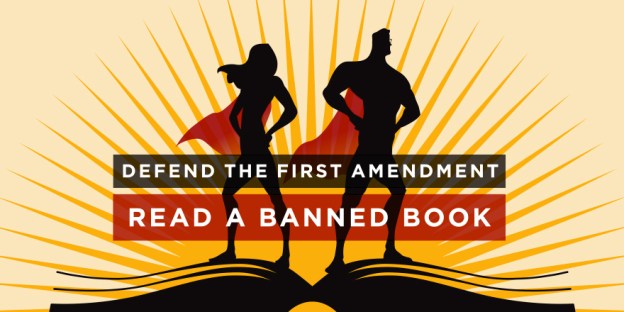
This week marks the start of the annual Banned Books Week! The event was established in 1982 as a way to celebrate the freedom to read and shine a light on the persistent problem of censorship. Organizations across the nation have been participating ever since. This year the celebration takes place from September 25-October 1.

According to the American Library Association (ALA), Banned Books Week “highlights the value of free and open access to information” as well as “brings together the entire book community; librarians, booksellers, publishers, journalists, teachers, and readers of all types, in shared support of the freedom to seek and to express ideas, even those some consider unorthodox or unpopular.”

Since 1982, more than 11,300 books have at least been challenged, meaning a person or group has requested for a book to be removed. In the last year alone, 275 books were recorded challenged by the ALA. Titles of the top ten most challeged books of 2015 include Looking for Alaska by John Green, E.L. James’s Fifty Shades of Grey, and I am Jazz by Jessica Herthel and Jazz Jennings. Books such as these are often challenged for their diverse content.

An infographic on Readers.com explains the reasoning behind these challenges to be primarily caused by books containing offensive language, sexual content, or content unsuited for the age group it is being presented to. Other reasons include violence, homosexuality, religious views, racism, and substance abuse. While some books remain merely challenged, other books suffer a ban from certain countries meaning the book is successfully removed from libraries or being taught in schools.

Banned Books Week celebrates all 11,300 of these challenges. With censorship prohibiting what people can and cannot see or read, it is important to exercise freedom. Turning a blind eye to “diversity” won’t solve anything. This week, and in the weeks following, embrace diversity instead of trying to hide it. Read freely!

For more information on Banned Books Week visit their website or follow their Twitter!

Check this out!

Staff editor Jennifer Rohrbach has been published on FlashFiction.net. Read her awesome analysis here!

“You Must Contribute Brain!”

You haven’t seen the inside of a book in over two months, and you ask yourself, why?!?Summer, that’s why. It is natural human laziness to leave the doors of the University behind and shut down your mental and literary expansion despite your best wishes to conquer that summer reading list (It’s growing in the corner of your room, neglected, cold, and shunned…). But the challenge is to continue to immerse yourself in opportunities of learning, however simple it may be, perhaps with adult literature or a great classic.

So here’s what I’ve learned forcing myself to read this summer.

The OBVIOUS benefits of using your literary brain over the summer:

1. You will be able to recall the things you’ve spent the entire semester stressing over!
–Remember how many times you re-read “Kubla Khan” by Samuel Taylor Coleridge just so you could get to the bottom of what was really going on? Yeah, reading more literature over the summer enables you to bring that trained cognitive thought process back to the surface without as much work, thus making you smarter!

2. Your conversations will have more depth than the obvious focus on the weather and tanning!
–All of sudden you come to a revelation and BOOM! you’ve gotta talk about The Parable of the Cave from The Republik by Plato, and how you’ve crawled out and can stand in the glory of the sun! So much more interesting than the typical tan line conversation, and surely a lot less embarrassing if your tan lines aren’t even that impressive…it happens.

3. You’ll be able to see all of the neat little references in the newest summer blockbusters!
–That’s right, they’re everywhere. Not everyone gets them, but you will!

4. It will disconnect you from the eternal connection that is social media.
–You, a book, maybe some coffee and plenty of time to live within the narrative of something great is all you really need.

5. Your imagination will grow exponentially!
–LOOK AT HOW SUDDENLY CREATIVE YOU ARE!

I’ve been indulging in a few novels that have surely made an impression on my summer. If anyone is looking to begin their summer reading, I would highly suggest Tom Hardy’s Jude the Obscure, or Charles Dickens’ David Copperfield! Remember, just because the sun is out and the sky is blue doesn’t mean your literature doesn’t want you too! So, READ ON!

Kimberlee Roberts

*Title credit to Daniel Robinson, Smart Barker

The Audiobook: The E-reader’s Less Controversial Cousin

Image courtesy of Carlos Porto at FreeDigitalPhotos.net

Image courtesy of Carlos Porto at FreeDigitalPhotos.net

In recent years, book lovers everywhere have been faced with the question of whether or not an e-reader can compare to the tactile sensation of holding a good book in one’s hands. There are pros and cons to both, but in this discussion, there’s one reading medium that’s frequently overlooked:  the audiobook.

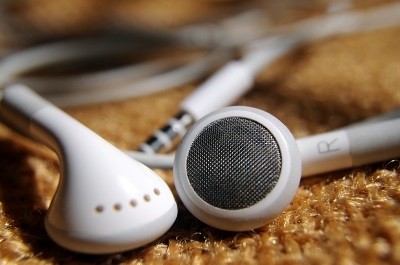
I have yet to hear a single person panic about the easy availability of audiobooks, and what that means for the future of the physical book. Nevertheless, thanks to the internet and the widespread use of various forms of technology, audiobooks are easier to acquire than ever, and easier to consume. With ipods and smart phones, readers can grab a pair of earbuds and listen on the go. They can even do other tasks while reading.

There’s another advantage to audiobooks too:  for some, they’re more accessible than physical books. My younger brother has dyslexia, so when we were kids, my mother turned to audiobooks to help him read. She didn’t want the world of writing that everyone else could access to be closed off to him because of his disability. People who are blind can also benefit from audiobooks for this reason.

My family used to listen to audiobooks on long car rides, so vacations were prime reading times. So were easy, everyday chores. We’d listen to a chapter of From the Mixed-Up Files of Mrs. Basil E. Frankweiler while loading the dishwasher or folding laundry. We’d usually end up sitting and listening once the chore was done, too absorbed in the story to look for another task. My favorite audiobooks were read by actors who changed their voices for different characters. To this day, there’s a line from the aforementioned book that my family frequently quotes, because of how hilarious it sounded when read aloud.

That brings me to the best part about audiobooks:  the audio part. They add something to the reading that isn’t there in a paperback or e-book. The actor’s inflections and voicing of the characters adds another layer to the reading. Reading an audiobook isn’t just reading, it’s experiencing a performance. The difference between experiencing a physical book and an audiobook is similar to the difference between reading a play and seeing it performed, though subtler.

All this makes me wonder why audiobooks aren’t more popular. Most of the people I’ve talked to about this—people who love to read—are far more likely to read a physical book or e-book than an audiobook. I initially thought this was just chance, and that I happened to only know fans of physical books and e-books. A Google search brought me to some statistics from the Pew Research Center, which can be viewed here. Despite my small, relatively insignificant sample size, it seems my experience matches the statistics. People are actually reading far more physical books than anything else, with e-books coming in second at a much lower percentage, and audiobooks dead last.

Seeing this information, I can’t help but wonder what percentage of readers has never listened to an audiobook. Are people choosing physical books and e-books out of preference, or out of habit? I certainly have a bias toward audiobooks. While I don’ t prefer them over other forms of reading in all cases, I like to read them.  I have trouble imagining that most readers have tried them and chosen to never use them again. Then again, maybe audiobooks are sometimes not as convenient as other forms of reading; not all books are available in audio form. That might send some people to a different reading format.

Some people find their focus drifting away during long periods of listening, but I personally find that audiobooks increase my typically short attention span. In middle school, the CD version of The Lord of the Rings helped me get through Tolkien’s lengthy descriptions of Middle Earth. Often when I’m reading something that’s particularly dense, I wish I had an audio version. Maybe I’m an auditory learner, or maybe it’s because an audiobook keeps plowing ahead at a steady pace, but whatever the reason, I’ll probably always be a big audiobook fan. I’m seriously considering getting a subscription to audible.com after college, once I have more time to read for fun.

Have you tried audiobooks? What’s your opinion about them? Feel free to leave a comment!

-Emily DeFreitas

Ready, Aim, Fire: The Purpose of Literary Ammunition

I’ve often been told by one of my professors that “The more you know, the more you know you don’t know,” and each time those words grace his lips, my gut turns in acknowledgment of my own ignorance. So I thought to myself: the best way to conquer a text is to be prepared with the best literary ammunition.

What do I mean by literary ammo? It’s having writers like Homer, Faulkner, Joyce, and Shakespeare in your back pocket and pulling them out to make connections in a piece of work so that allusions and references don’t fly over your head. It is the big gun in conversations, it steals ground for you in arguments, and gives you literature to love in your spare time. Ammunition is what you become equipped with when you study survey class after survey class, finding all of the best moments in the literary canon.

I can enjoy a movie and laugh at all of the typical punch lines, but I may have missed that hilarious pun on Virginia Woolf, or failed to notice that the Spongebob Movie is really a glorified cartoon version of the Odyssey. The more you learn, the more humor can exceed the common slap-stick comedy. People aren’t aware of the references right before their eyes, and so they miss out on the great moments when our present culture mimics or makes fun of our rich past.

This ammunition extends beyond popular culture; it is also a crucial element in understanding why our authors write the things they do, what interests motivate them, and knowing what they mean when they reference a person, place, or thing. That’s another value of a liberal arts education – for those people in studies separate from the humanities, you’ll be thanking your professors when you’re the only one laughing in a crowded theater, or you understand the hobbies of the people you are studying because you had to take a lit course. These things come together to make you more knowledgeable and complex.

As literate people, we owe it to ourselves to expand our knowledge by diving into huge varieties of many different books and expertise. We have these opportunities to reap the culture and knowledge of our past in ways that make us deeper, more humane individuals. So, expand your literary horizons, increase your ammunition, and as you absorb each page, stanza, or phrase, know that you are creating a better version of yourself.

by Kimberlee Roberts

The FUSE Conference: Uniting Literary Journals Across the Nation

The gathering of undergraduate editors at the 2014 FUSE conference at Bennington College in Bennington, VT.

The gathering of undergraduate editors at the 2014 FUSE conference at Bennington College in Bennington, VT.

The FUSE conference, which took place at Bennington College in Vermont this November, was a unique opportunity to interact with like-minded people who aim to produce excellent literary journals. FUSE, or the Forum for Undergraduate Student Editors, is a national organization that serves to connect student editors from schools across the nation, giving them the chance to share ideas, offer advice, and support each other in their endeavors.

The conference consisted of presentations by students, faculty, and guest speakers about editing, publishing, and other general concepts related to creating a literary journal with undergraduates. There was also time set aside for attendees to take a look at the various journals being represented, and to show their own.

DSC00238 (2)

Autumn Heisler, editor-in-chief of Widener Ink (left) and Emily DeFreitas, editor-in-chief of The Blue Route (right) present on community outreach during the conference.

While there, I had the opportunity to take part in a presentation on community outreach, but more importantly, I was able to listen to the thoughts, ideas, and strategies of other literary journals. I came out of the event with a substantial list of things The Blue Route staff should consider doing in the future, and I suspect that editors from other schools did as well. As one of the speakers pointed out, the main competition for a literary journal isn’t other literary journals. In reality, we compete with the distractions of the electronic world around us as we attempt to reel in readers. Because of this, having a network through which we can promote each other, encourage readership, and improve the individual journals we’re producing is an extremely valuable thing.

Some of the ideas presented were not necessarily specific to literary journals alone. Some might be well applied to groups like Widener’s own English Club. Students talked about write-ins, open mics, and blind dates with books, all of which are fantastic ways to participate in the literary world, building a reading and writing community in person, not just online or on paper. This conference was meant to assist in building that community. Throughout the event it became clear that there are many ways to do that, and literary journals play an important role.

by Emily DeFreitas

Does your school have a literary journal? Are you interested in learning more about FUSE? Check out their website at http://www.fuse-national.com/

Collaboration at its Finest: A Review of Goddard College’s Literary Journal “Duende”:

Producing a literary journal is a task that requires not only great time and effort, but also a group of people dedicated to collaborating to create the best collection of poetry, prose, and other works possible. This idea of collaboration is one that the students in the Writing program at Goddard College latched onto to produce their first edition of the literary journal “Duende,” out last month, and the results are amazing.

Duende is a product of collaboration on a national level. Unlike most undergraduate literary journals, which are run by students from one campus, this journal’s staff are located all across the United States, from Oregon to Pennsylvania and everywhere in between. The staff only meets face to face once each semester; I can only imagine how tricky communicating about a complex piece of poetry is without that in-person dynamic!

A quote by Federico Garcia Lorca appears at the bottom of the artfully designed home page, explaining that duende “is a force…of a style that’s truly alive: meaning, it’s of the veins: meaning, it’s of the most ancient culture of immediate creation”. This simple philosophy of collecting and sharing works of art teeming with raw soul and passion made me eager to explore their first issue to see exactly the kinds of works desired by Duende’s editors.

Within the visual art category, I was most enthralled by Deanna Lee’s collection of hand-drawn pieces rooted in the exploration of the line. Lee shows that groupings of abstract lines can both evoke contrasting characteristics (weightlessness vs. heaviness, for example) while all maintaining a sense of life and action. I love the sense of movement in Lee’s work, and every time I look back at these three drawings, I feel as if they’ve moved somehow, shifted as my perspective on them shifts.

Switching to the prose section of the journal, another interesting aspect of Duende’s collaborative spirit is unveiled. Categories like “prose poem” and “hybrid prose”  are attached to these varying works. I love Duende’s philosophy that regardless of genre, good writing is good writing and needs to be shared. My favorite work in this prose section is Justin Torres’ flash-fiction piece. Beautiful diction juxtaposed against edgy, sometimes jolting scenes, Torres’ concise story needs to be read more than once in order to pick up on all the social and moral issues presented.

Duende tells that they are “especially interested in collaborations between two or more writers, or between writers and visual artists”, and my favorite piece in the poetry section involved both visual and written art. The prose-poem This is How We Dream and its accompanying artwork present an interesting pair of works to be compared and contrasted. Pairing pieces of art together is a tricky thing to do in order to emphasize the best parts of each work, but I find the contrasting colors of the visual art and the theme of dream versus reality in the poem to work incredibly well together.

Coming together for the sake of promoting written and visual art is the goal of most every literary journal produced by undergraduates, but Duende does it exceptionally well. Uniting students nationwide through Goddard College’s Writing program, combining genres of work to create bold new styles, and encouraging artists of various mediums to work together, Duende is a truly innovative journal that I cannot wait to hear more from.