Tag Archives: Creative writing

A Scary Good Read: Mary Shelley’s Frankenstein; or, the Modern Prometheus

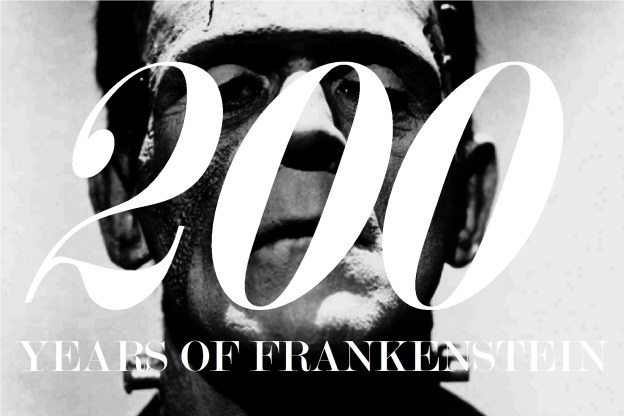
2016 marks the 200th anniversary of the Haunted Summer; the summer of 1816 that Lord Byron, Claire Clairmont, John Polidori, Percy Bysshe Shelley, and Mary Wollstonecraft Godwin (later Mary Shelley) spent together at Lake Geneva. The group took refuge from the poor weather one rainy June day in the Villa Diodati. Back then they didn’t have Netflix or the internet to occupy their time, so what better activity for a group of intelligent, creative, bored minds to do than write?

Lord Byron challenged each person in the group to compose a ghost story. Despite Byron and P.B. Shelley being well-established writers of the time, they attempted the challenge with little success. Polidori, Byron’s personal physician, would later write The Vampyre, which was then revisited by Bram Stoker’s Dracula. Mary, however, was struck by inspiration. That haunted night gave birth to one of the most iconic, well-known, thought-provoking tales of all time: Mary Shelley’s Frankenstein; or, the Modern Prometheus. She was only 18 years old during the Haunted Summer and 20 when her novel was published in 1818.

 frankenstein-tl

The first edition left the author anonymous causing many people to attribute the novel to Mary’s father, William Godwin, an influential philosopher of the time (and whose ideals influenced the plot of the novel). The second edition, published in 1822, gave Mary the credit she deserved. Several more editions were published both during and after her lifetime.

It’s difficult, if not impossible, to list all the adaptations and creations that Frankenstein has influenced for the past 200 years. Literature, film, plays, television, and dance are just a few mediums by which people have explored the beloved story. In his book, The Detached Retina: Aspects of SF and Fantasy, writer and anthology editor Brian Aldiss supports the claim that Frankenstein is a progenitor of the science fiction genre and counts the novel as an ancestor of future works by the famous science fiction writer, H.G. Wells.

From a literary standpoint, the structure, flow, characterization, plot, and themes of this novel are so complex and interesting that people are still analyzing it today. Mary Shelley’s talent can be overshadowed by the success of her husband, Percy Bysshe Shelley, and the works of the male-dominated canon, but it is important to remember this incredible novel and its importance to literary and world history. So, if you’re looking for a spooky read this Halloween, pick up Mary Shelley’s Frankenstein; or, the Modern Prometheus. I promise I’m not tricking you—this book is a real treat!

Written by Jennifer Rohrbach.

Moore, please!

Dinty W. Moore recently visited Widener’s campus as part of the Distinguished Writers Series. Throughout the week he met with students who have been reading his creative nonfiction books and essays in class and a shared a few selections from his new book, Dear Mister Essay Writer Guy, at a public reading on Wednesday. As a published author who has taught creative writing at multiple universities and has been writing for over 30 years, Moore had a lot of insightful advice for aspiring writers, which he generously shared:

1. What’s important about writers is what they say

Every writer has their own voice, “which is going to be different from any other voice,” said Moore. “That is something that can’t be taught. That we have to discover.” He also emphasized the importance of trial and error and repetition for a writer. “Your first draft is you wandering around the page trying to figure out what’s going on.” For him, the first few drafts are the hardest parts of the writing process. He writes the first draft of a book or essay solely to help him figure out what he is trying to say. Only during later drafts, when he understands what needs to be said, does he writes with the reader in mind.

2. You need curiosity to be a writer

To truly discover your own voice and figure out what it needs to say, you have to ask questions. “The trick,” he explained, “is not knowing what you want to say, but to be curious. Have questions. Discovery is starting with a question and working the answer out on the page.” Curiosity about a subject is a quality that all good writers have. One debate in the literary world is if creative writing is something that can be taught. Moore believes so. “There’s a lot about writing—including creative writing—that can and should be taught,” he said. “Students take math so they understand a little bit more about how mathematics works, and students take science classes to understand how science informs the world,” he said. “I think if you take a writing class, and you don’t end up being a writer, it still opens the mind and lets people see how a certain part of the world works and thinks…You can’t teach creativity, but you can encourage it.”

3. There’s no such thing as writer’s block

“Writer’s block is when you listen to the voices in your head that say you can’t do it,” Moore said. The solution? “Talk back to the voices. Say, ‘I hear you, but I’m going to ignore you and write this now.’”

That’s easier said than done. But in his book, Crafting the Personal Essay, Moore dedicates an entire chapter to the idea of writer’s block and how to push through it. You’ve got to “Expect the Negative Voices” and “Expect a Lousy First Draft” (literally the section headings of this chapter), and realize that “the true definition of writer’s block is when the writer gives up.” You’ve got to keep trying. Which brings us to our next writing tip:

4. Persistence

Moore has a busy life teaching, writing, traveling, and just living in general. In order to make time for his writing, he implements the “ass-in-chair” method; he gets up early in the morning, sits down, and makes himself write for two hours a day. It’s not easy, especially for college students, to make writing a part of our daily schedule. For some who juggle classes, work, and a social life, writing can get pushed to the background. Moore suggests that aspiring writers set goals for themselves. “Maybe watch 6 hours of football on the weekend instead of 10,” he joked. But he is right; schedule some time to sit down and focus on your writing. Make it a priority.

Another piece of advice Moore offered is to make a lot of mistakes. “Write a lot of failed poems or failed stories,” he said. “You learn the most from trial and error. It’s like trying to learn how to play tennis. You get out there and swat at the ball and make a total fool of yourself. If you do that for two or three days, you won’t become a wonderful tennis player, but you’ll start to get a little bit of control. Eventually you’ll hit something that goes straight over the net. If you practice long enough you may not become Serena Williams, but you’ll be able to play tennis, and as wonderful and mysterious as the art of literature is, writing is kind of the same.”

If you’re craving Moore, be sure to check out Dear Mister Essay Writer Guy: Advice and Confessions on Writing, Love, and Cannibals, Moore’s newest book of and on essay writing, available now.

Written by Jennifer Rohrbach

AWP: An Undergraduate Newcomer’s Perspective

Originally posted at The Ink Plot

Community, for a writer, is important. “Writer” is an identity often shunted aside in favor of more socially acceptable options, which means that finding others who share in your love of language and a well-crafted sentence is paramount. I have identified as a writer since grade school, so I have come to accept that people will raise eyebrows or hear “Starbucks Barista” dubbed over my words when I tell them what I want to do after graduation. While I do not believe, as they do, that my future in my field is nonexistent, it is frustrating to hear those doubts repeated so often. Occasionally, I struggle to remember that I am not the only person accustomed to hearing these remarks.

I went out to dinner on the last night of the conference with the other Widener students and faculty who attended the conference. (Photo courtesy of Michael Cocchiarale)

I went out to dinner on the last night of the conference with the other Widener students and faculty who attended the conference. The others were on the other side of the table. (Photo courtesy of Michael Cocchiarale)

A few weeks ago, I had the opportunity, through the generosity of my university’s Creative Writing Department, to attend the largest annual gathering of writers in the country: the AWP Conference. There, I found a writing community that I could scarcely have dreamed existed.

I had heard stories of the conference from students who attended in past years, but being immersed in it was a wild experience. Here were people who have faced the same struggles as me; who strive toward the same dreams and goals; and who have found and succeeded at the very careers that some would have me believe cannot be found.

Better yet, some of those successful people were the panelists who shared their advice for writers aspiring to similar success (or just similar projects). I attended panels on careers in writing; on troubleshooting faulty plotlines; on writing unlikeable characters; on writing violence; on writing sex. No subject is taboo when you strive to allow the truth to leak from your pen. Authenticity supersedes awkwardness.

Even now, weeks after returning to the daily grind of my classes, I cannot quite force my thoughts on the conference to coalesce. They are like clouds I watch while lying in the grass, constantly shifting: first a rabbit, then a dog, then a lion. Even if I were to give a full account of every panel, interaction, booth at the Book Fair, even of the hours spent away from it all in the Caribou Coffee shop two blocks away from the Convention Center, I could not possibly convey the magnitude of the experience. The words overload and overwhelming fall short of the array of daily options, after which it was all I could do to drag myself into the shower and then collapse into bed, making sure to set my alarm early enough to do it all over again the next day.

Representing at the FUSE table with the other student editors from Widener: Autumn Heisler of Widener Ink and Emily DeFreitas of The Blue Route.

Representing at the FUSE table with the other student editors from Widener: Autumn Heisler of Widener Ink and Emily DeFreitas of The Blue Route. (Photo courtesy of Michael Cocchiarale)

The conference also allowed me to meet undergrads from writing programs around the country through the Forum for Undergraduate Student Editors (FUSE), and to plug into my own Widener writing community more. My professors have never exactly been boring suits in front of a blackboard, but I still learned a lot by going out to dinner with them and talking about something other than the book we’re reading in class or how to improve my story/poem/essay to earn an A. It’s good to be reminded every once in a while that “professors are people, too.”

I have been fortunate in my life to find support for my creativity first at home, and then in the small Creative Writing Department here at Widener, among the students with whom I workshop in classes and work on the literary journals, but that is a mere microcosm of the community I found at AWP.

by Sierra Offutt

Raison D’écrire—Why Writers Write

screenshot_cover photo

There is a debate in the writing world over whether it is best to write for oneself, or for an audience. Writing for the self is often viewed as the more artistic approach, usually for the purpose of self-expression. Writing for an audience, on the other hand, while seen as an excellent way to target a certain group of people and build a fan base, is sometimes viewed as “selling out,” as if writers only do this to make money. There are countless examples to show that this is an enormous oversimplification. I’ve actually been fortunate enough to have participated in the publication of a work that provides a fascinating answer to the question of why people write as a typist and co-editor.

The book in question is Letters to My Younger Self, a collection of writing by incarcerated men at Graterford prison, and it took several years to create. It all began when Professor Jayne Thompson, who teaches Creative Writing at Widener University, started to teach a writing class at Graterford prison, a maximum security men’s prison in Graterford, Pennsylvania. The men wrote insightfully, with powerful poetry, prose, and letters addressed to their younger selves, covering topics such as home, family, decisions, and prison.

In addition to her classes at the prison and at Widener, Professor Thompson taught some classes at Chester High School and heard the cases of juvenile first offenders in Chester, PA. Time after time, she watched her students disappear into the criminal justice system, and then heard cases from others of the same age who were also falling into lives of crime. She mentioned this to the men at the prison, and they expressed deep concern for those young people, who reminded them of themselves when they were younger, and together they came up with an idea for a book of their writing as a way to address this problem.

I was able to visit the prison for the first time a few weeks ago, and I was deeply moved by their reasons for writing, as well as their reasons for sharing their work. The men, many of them fathers themselves, expressed a desire to reach out to those young people in some way. They feel that they have failed the younger generations by making choices that led to their incarceration, because now they aren’t there to support, guide, and encourage those youngsters in a way that might be beneficial to them. They feel this responsibility not just for their own children, but for any children whose lives they might have influenced in a positive way if they were living free lives themselves. They are attempting to make up for that absence with their writing. More than anything, they encouraged their young readers to get an education, and to choose their friends wisely.

Clearly, the works in this book were written with an audience in mind, but not for financial reasons. The book can be purchased on Amazon, but the money from each purchase of the book goes to a fund for putting it in the hands of its target audience: at-risk youth. The men did not write for fame any more than for fortune, as the prison requested that their last names not be given, so only their first names and last initials are displayed beside each piece.

Are they writing for self-expression then? There are definitely elements of that, as they share many personal experiences that they feel led them to where they are now, and they may have felt some closure as they reflected in this way, but that is just one part of the picture. Ultimately, I’ve found that writers write for a myriad of reasons, and who is to say that one is better than another? This book is an excellent example of why writing for a particular audience does not necessarily imply selfish intent. In this case, it is an effort to bring about change.

To learn more about this book, and to hear some recordings of the men reading their work, check out this segment of Radio Times with Marty Moss-Coane.

by Emily DeFreitas