“You Must Contribute Brain!”

You haven’t seen the inside of a book in over two months, and you ask yourself, why?!?Summer, that’s why. It is natural human laziness to leave the doors of the University behind and shut down your mental and literary expansion despite your best wishes to conquer that summer reading list (It’s growing in the corner of your room, neglected, cold, and shunned…). But the challenge is to continue to immerse yourself in opportunities of learning, however simple it may be, perhaps with adult literature or a great classic.

So here’s what I’ve learned forcing myself to read this summer.

The OBVIOUS benefits of using your literary brain over the summer:

1. You will be able to recall the things you’ve spent the entire semester stressing over!
–Remember how many times you re-read “Kubla Khan” by Samuel Taylor Coleridge just so you could get to the bottom of what was really going on? Yeah, reading more literature over the summer enables you to bring that trained cognitive thought process back to the surface without as much work, thus making you smarter!

2. Your conversations will have more depth than the obvious focus on the weather and tanning!
–All of sudden you come to a revelation and BOOM! you’ve gotta talk about The Parable of the Cave from The Republik by Plato, and how you’ve crawled out and can stand in the glory of the sun! So much more interesting than the typical tan line conversation, and surely a lot less embarrassing if your tan lines aren’t even that impressive…it happens.

3. You’ll be able to see all of the neat little references in the newest summer blockbusters!
–That’s right, they’re everywhere. Not everyone gets them, but you will!

4. It will disconnect you from the eternal connection that is social media.
–You, a book, maybe some coffee and plenty of time to live within the narrative of something great is all you really need.

5. Your imagination will grow exponentially!
–LOOK AT HOW SUDDENLY CREATIVE YOU ARE!

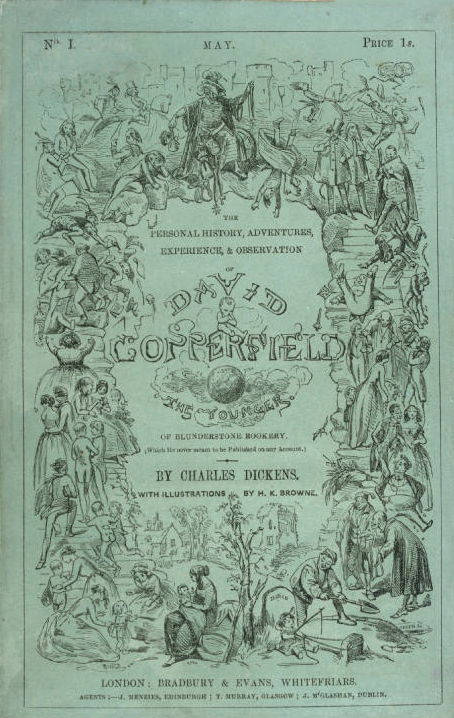
I’ve been indulging in a few novels that have surely made an impression on my summer. If anyone is looking to begin their summer reading, I would highly suggest Tom Hardy’s Jude the Obscure, or Charles Dickens’ David Copperfield! Remember, just because the sun is out and the sky is blue doesn’t mean your literature doesn’t want you too! So, READ ON!

Kimberlee Roberts

*Title credit to Daniel Robinson, Smart Barker

Fall Submission Period, Aug. 1-Oct. 1

The Blue Route will be accepting submissions for Issue #15 from August 1-October 1. Undergraduates, please send us your best fiction, creative nonfiction, and poetry during that window. For more information, see our submission guidelines.

The Grimmer Side of the Brothers Grimm

Happily ever after? This writer’s trip to Germany revealed that even the most well-known fairy tales hold some very dark secrets.

If you grew up reading bedtime stories every night and obsessively watching Disney movies as I did, you probably know who the Grimm Brothers are. Jacob and Wilhelm Grimm collected hundreds of German stories, fairy tales and folklore in the 1800s. Because most of these were passed down orally through the generations, and only existed in that format, the brothers published them in books so that the stories could be enjoyed for centuries to come.

Author's photo of a home of in Kassel where a woman affiliated with the Brothers lived!

Author’s photo of a home of in Kassel, Germany where a woman affiliated with the Brothers lived!

I recently participated in a homestay in Kassel, Germany, a beautiful town that the brothers called home for 30 years. Despite studying law at the University of Marburg, Jacob and Wilhelm Grimm are best known for publishing the book Kinder und Hausmärchen (translated to Children’s and Household Tales) in 1812 and various editions afterwards. Some of the more well-known fairy tales published by the Grimm’s include Cinderella, Rapunzel, Hansel and Gretel, Little Red Riding Hood, Tom Thumb, and Snow White. If you were to look at a list of Grimm fairy tales (in fact, I’ll leave a link here http://www.pitt.edu/~dash/grimmtales.html) you’d surely recognize a few titles. However, these are not the same heart-warming, happy-ending stories you’re used to hearing.

For example, let’s take a look at Cinderella. We all know and love the Disney version of the beautiful orphan girl and her wicked stepmother and step-sisters. We sympathize with her underdog situation and dogged spirit. We cry with her when her dress is ruined and rejoice when the fairy Godmother appears. We root for Cinderella to beat the odds and end up with her prince to live happily ever after.

However, in the Grimm version there is no fairy Godmother, but two white doves. When Cinderella’s stepsisters try on her golden slipper (another difference), their feet are too big. One sister cuts off a toe and the other cuts off her heel. And at Cinderella’s wedding, they get their eyes pecked out by pigeons.

A little different, right? Many of these original stories are darker than their modern counterparts. Over time, the stories evolved and softened to appeal to a younger audience, children who could still be enraptured by magic and fantasy. But the first tales are downright disturbing; trickery, thievery, and murder are just a few of the themes you might find in the Kinder und Hausmärchen.

Because of the mature content of these fairy tales, I would exercise caution before using one as a bedtime story. For those of us who are a bit older and arguably wiser, Grimm’s fairy tales offer a different perspective from the stories we’ve grown up with. So if you’re ever in the mood for some twisted entertainment, or just feel like ruining your childhood, give these stories a read!

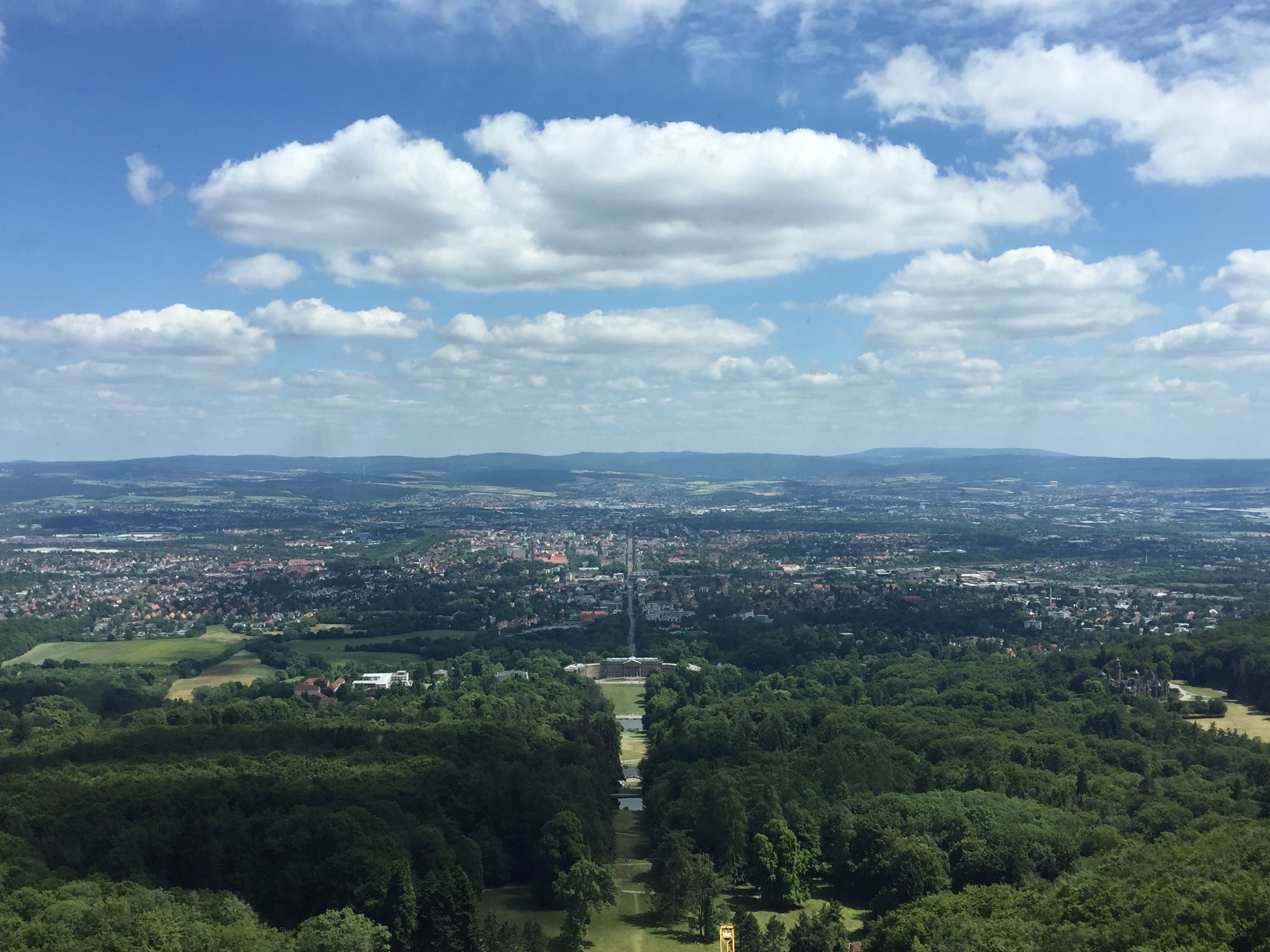
Aerial view of Kassel, Germany from the Herkules Monument that overlooks the city

Author’s photo of an aerial view of Kassel from the Herkules Monument that overlooks the city

References:

http://www.pitt.edu/~dash/grimm.html#jointpublications

http://www.nationalgeographic.com/grimm/cinderella.html

Written by Jennifer Rohrbach

College Orientation for Humanities Majors

And so it’s the middle of June. The mortarboard caps have been thrown in the air, sensational senior week beach trips have been carried out…now it’s time for college orientation season to begin! We all remember that awkward day of bonding games, peppy tour guides, and motivational speeches, but how much does that day really prepare you for what’s ahead, especially as a Humanities major? What advice or tips would you give to incoming Humanities students as their college experience truly begins with orientation day? Comment and let us know…and then go tell that to any recent graduates in your life about how to deal with what’s coming next!

A Different Kind of Summer Student

Confession: Last summer, I made Faulkner my own summer reading. Or at least I tried…it was a struggle. The problem wasn’t that I didn’t enjoy the complex characters and sinuous narrative of Absalom, Absalom! because I absolutely did. The problem was that it was summer.

From the time we enter high school and start receiving summer reading lists, we’re expected to be the same scholars in the summer that we are during the school year. It’s an institution that makes sense for high school students, especially those in AP classes where there’s already too much material to get through in the year before the exam, but in college, the situation is quite a bit different. Instead of taking 5 AP tests all in different subjects, as an undergraduate, your major is your absolute focus, the area your brain spends in thought for a whole year. When you’ve spent your semester reading Wallace Stevens, James Joyce, and William Shakespeare all at the same time, when you reach for intense scholarship in your field during the semester, it’s okay to allow yourself to be a different kind of scholar in the summer. There are so many other ways to be just as interesting a scholar without forcing yourself through a novel just because you think it’s something you should be reading.

IMG_0354

The author at the Hemingway House in Key West, FL, during Summer 2014.

Instead, read something for fun! Reread a childhood favorite, open Fifty Shades of Grey sans embarrassment, or relax poolside and flip through gossip magazines. Or, travel somewhere of historical/literary/personal significance and watch throughout the year how much that experience comes back to deepen your understanding of a particular subject. Write in a diary, stay up late and talk about existential issues with your friends, sit and people-watch for an afternoon; though it may not seem so, doing these things makes for a scholar with an interesting and broad perspective of humanity.

So if you’re someone who wants to read Faulkner for fun this summer, by all means, have at it. But for those looking for a way to take a break and be a different sort of scholar for a few months, now is your time.

Written by Emma Irving

AWP: An Undergraduate Newcomer’s Perspective

Originally posted at The Ink Plot

Community, for a writer, is important. “Writer” is an identity often shunted aside in favor of more socially acceptable options, which means that finding others who share in your love of language and a well-crafted sentence is paramount. I have identified as a writer since grade school, so I have come to accept that people will raise eyebrows or hear “Starbucks Barista” dubbed over my words when I tell them what I want to do after graduation. While I do not believe, as they do, that my future in my field is nonexistent, it is frustrating to hear those doubts repeated so often. Occasionally, I struggle to remember that I am not the only person accustomed to hearing these remarks.

I went out to dinner on the last night of the conference with the other Widener students and faculty who attended the conference. (Photo courtesy of Michael Cocchiarale)

I went out to dinner on the last night of the conference with the other Widener students and faculty who attended the conference. The others were on the other side of the table. (Photo courtesy of Michael Cocchiarale)

A few weeks ago, I had the opportunity, through the generosity of my university’s Creative Writing Department, to attend the largest annual gathering of writers in the country: the AWP Conference. There, I found a writing community that I could scarcely have dreamed existed.

I had heard stories of the conference from students who attended in past years, but being immersed in it was a wild experience. Here were people who have faced the same struggles as me; who strive toward the same dreams and goals; and who have found and succeeded at the very careers that some would have me believe cannot be found.

Better yet, some of those successful people were the panelists who shared their advice for writers aspiring to similar success (or just similar projects). I attended panels on careers in writing; on troubleshooting faulty plotlines; on writing unlikeable characters; on writing violence; on writing sex. No subject is taboo when you strive to allow the truth to leak from your pen. Authenticity supersedes awkwardness.

Even now, weeks after returning to the daily grind of my classes, I cannot quite force my thoughts on the conference to coalesce. They are like clouds I watch while lying in the grass, constantly shifting: first a rabbit, then a dog, then a lion. Even if I were to give a full account of every panel, interaction, booth at the Book Fair, even of the hours spent away from it all in the Caribou Coffee shop two blocks away from the Convention Center, I could not possibly convey the magnitude of the experience. The words overload and overwhelming fall short of the array of daily options, after which it was all I could do to drag myself into the shower and then collapse into bed, making sure to set my alarm early enough to do it all over again the next day.

Representing at the FUSE table with the other student editors from Widener: Autumn Heisler of Widener Ink and Emily DeFreitas of The Blue Route.

Representing at the FUSE table with the other student editors from Widener: Autumn Heisler of Widener Ink and Emily DeFreitas of The Blue Route. (Photo courtesy of Michael Cocchiarale)

The conference also allowed me to meet undergrads from writing programs around the country through the Forum for Undergraduate Student Editors (FUSE), and to plug into my own Widener writing community more. My professors have never exactly been boring suits in front of a blackboard, but I still learned a lot by going out to dinner with them and talking about something other than the book we’re reading in class or how to improve my story/poem/essay to earn an A. It’s good to be reminded every once in a while that “professors are people, too.”

I have been fortunate in my life to find support for my creativity first at home, and then in the small Creative Writing Department here at Widener, among the students with whom I workshop in classes and work on the literary journals, but that is a mere microcosm of the community I found at AWP.

by Sierra Offutt

The Audiobook: The E-reader’s Less Controversial Cousin

Image courtesy of Carlos Porto at FreeDigitalPhotos.net

Image courtesy of Carlos Porto at FreeDigitalPhotos.net

In recent years, book lovers everywhere have been faced with the question of whether or not an e-reader can compare to the tactile sensation of holding a good book in one’s hands. There are pros and cons to both, but in this discussion, there’s one reading medium that’s frequently overlooked:  the audiobook.

I have yet to hear a single person panic about the easy availability of audiobooks, and what that means for the future of the physical book. Nevertheless, thanks to the internet and the widespread use of various forms of technology, audiobooks are easier to acquire than ever, and easier to consume. With ipods and smart phones, readers can grab a pair of earbuds and listen on the go. They can even do other tasks while reading.

There’s another advantage to audiobooks too:  for some, they’re more accessible than physical books. My younger brother has dyslexia, so when we were kids, my mother turned to audiobooks to help him read. She didn’t want the world of writing that everyone else could access to be closed off to him because of his disability. People who are blind can also benefit from audiobooks for this reason.

My family used to listen to audiobooks on long car rides, so vacations were prime reading times. So were easy, everyday chores. We’d listen to a chapter of From the Mixed-Up Files of Mrs. Basil E. Frankweiler while loading the dishwasher or folding laundry. We’d usually end up sitting and listening once the chore was done, too absorbed in the story to look for another task. My favorite audiobooks were read by actors who changed their voices for different characters. To this day, there’s a line from the aforementioned book that my family frequently quotes, because of how hilarious it sounded when read aloud.

That brings me to the best part about audiobooks:  the audio part. They add something to the reading that isn’t there in a paperback or e-book. The actor’s inflections and voicing of the characters adds another layer to the reading. Reading an audiobook isn’t just reading, it’s experiencing a performance. The difference between experiencing a physical book and an audiobook is similar to the difference between reading a play and seeing it performed, though subtler.

All this makes me wonder why audiobooks aren’t more popular. Most of the people I’ve talked to about this—people who love to read—are far more likely to read a physical book or e-book than an audiobook. I initially thought this was just chance, and that I happened to only know fans of physical books and e-books. A Google search brought me to some statistics from the Pew Research Center, which can be viewed here. Despite my small, relatively insignificant sample size, it seems my experience matches the statistics. People are actually reading far more physical books than anything else, with e-books coming in second at a much lower percentage, and audiobooks dead last.

Seeing this information, I can’t help but wonder what percentage of readers has never listened to an audiobook. Are people choosing physical books and e-books out of preference, or out of habit? I certainly have a bias toward audiobooks. While I don’ t prefer them over other forms of reading in all cases, I like to read them.  I have trouble imagining that most readers have tried them and chosen to never use them again. Then again, maybe audiobooks are sometimes not as convenient as other forms of reading; not all books are available in audio form. That might send some people to a different reading format.

Some people find their focus drifting away during long periods of listening, but I personally find that audiobooks increase my typically short attention span. In middle school, the CD version of The Lord of the Rings helped me get through Tolkien’s lengthy descriptions of Middle Earth. Often when I’m reading something that’s particularly dense, I wish I had an audio version. Maybe I’m an auditory learner, or maybe it’s because an audiobook keeps plowing ahead at a steady pace, but whatever the reason, I’ll probably always be a big audiobook fan. I’m seriously considering getting a subscription to audible.com after college, once I have more time to read for fun.

Have you tried audiobooks? What’s your opinion about them? Feel free to leave a comment!

-Emily DeFreitas

A Crash Course in The American Poet Laureate Position

Most English, Creative Writing, and other students of the Humanities don’t find the possibility of a government job too appealing. Though art and politics are not mutually exclusive disciplines, “creative freedom” isn’t a term often thrown around in our bureaucracy.

Now allow me to introduce to you the finest government position ever conceived for creative minds: The Poet Laureate.

The idea of a national Poet Laureate extends back to Italy in the early 14th century, but the American office has only been around since the 1940s. Great minds including William Carlos Williams and Robert Frost have held this position, of which the sole work is to “raise the national consciousness to a greater appreciation of the reading and writing of poetry” (More information can be found by clicking here). The Poet Laureate receives a $35,000 stipend for the honor and maximum free time to work on his/her own projects while in the position. There are some formal duties to attend to, such as opening and closing the Library of Congress’ annual poetry series, but other than that, the Poet Laureate has total freedom in choosing the best way to get Americans to listen to and care about poetry.

America’s current Poet Laureate is Pulitzer Prize and National Book Award Winner Charles Wright. Distinguished as he is, I had never heard of Wright before conducting research on this topic, though I love what I’ve found from him so far. The relationship between nature and aging comes up quite a bit in Wright’s poetry, but always in unique ways. After Reading Tu Fu, I Go Outside to the Dwarf Orchard is a darkly poignant example of Wright’s ability to synthesize the two topics with lines like “How deeper than elsewhere the dusk is in your own yard” expressing the relative loneliness of aging. On the other hand, Wright is also deeply affected by the topic of faith, and lines such as “One knows/There is no end to the other world/no matter where it is” from Last Supper express the comfort that such faith can bring.

The American Poet Laureate has the great potential to change the way America as a whole thinks about the art form of poetry. Whether poetry is your thing or you find it too difficult to truly enjoy, any student of the written word should pay close attention to what the current Poet Laureate is up to. The advancement of art in this country is something we should all be concerned about, and nobody has more power to do that than the Poet Laureate.

by Emma Irving

“Thou misbegotten rampallian mumble-news!”: The best of Shakespeare’s insults

In light of the numerous posts telling everyone what they should leave behind from 2014 and what they should adapt for a happier 2015 I thought I should contribute. Why not try to bring back the man who wrote some of the best comebacks in history? Have no fear, there are many generators and tools that can be used to augment your insult game.

William Shakespeare had a knack for finding some of the most forgotten, misplaced words in the English language and combining them with other words of equally odd merit to create the best one-liners in the language. Take that ingenuity and mix it with the technology of the 21st century, and now we have insult generators!

So here are the top 3 insults, of my creation, that everyone should introduce to their insult games for 2015.


Thou art a lumpish weather-bitten codpiece!

Thou art the epitome of a reeky onion-eyed malt-worm!

Thou are a yeasty fly-bitten foot-licker!


And here are some of my favorite of Shakespeare’s that are sure to silence anyone:


“How now, wool-sack, what mutter you?”

Henry IV part 1 

“Thou art baser than a cutpurse.”

The Two Noble Kingsmen

“[Thou] mountain of mad flesh!”

Comedy of Errors

“Your bedded hair, like life in excrements, start up and stand on end.”

Hamlet


If you love these and you can’t get enough, I found all of them on the same website where they provide the insults and create a chart where you can make your own? (click here for link)

So here’s to 2015 and having faith in the knowledge that you’ll have the last word every time with a sleek Shakespearean insult. Go get ’em, you wimpled base-court bugbears!

by Kimberlee Roberts

The Listened Word

Most writers were lovers of the written word before they ever picked up a pen (or keyboard) to create work of their own. Whether their discovery of literature was facilitated by parents and teachers or simply wonder at the freedom to be found between library shelves, books have long been an integral part of their lives. Some of these books take on more a personal meaning than others, lingering in memory and influencing a writer’s own work.

The stories that stuck with me most of all beyond my formative years as a reader were those that were read to me. I have distinct memories of sitting on the floor as my dad read A Wrinkle in Time to my sister and me; the iconic Harry Potter series was introduced to me by a passionate third grade teacher who read aloud from them each day. When I went back to reread these books on my own later, the story was altered.

Something about absorbing the words audibly and being sucked willingly into the rhythm of the sentences was more entrancing than turning the pages on my own. I could close my eyes and fall into the fictional world more completely. My imagination ran rampant. Someone else had control of the story and chose when to set it aside for the day; someone else got to choose the cliffhanger. The waiting was torturous, but the anticipation for the next chapter was thrilling.

It is that lack of control over the experience that made those stories so memorable, but also the catalyst that drove my desire to create tales of my own. I wanted dominion over the narrative, to create characters of my own and form backstories that the reader may never even receive. Because of this, I gave my imagination the opportunity to sit on the other side of the desk. I allowed it to create its own worlds and find the right sounds and rhythms and flow of images to describe them. I am too old now for anyone to sit me down and read to me, but I miss the days of being able to completely surrender to a story that didn’t originate in my own mind.

by Sierra Offutt