
By Maura O’Brien
Body Memory
Meriwether Clarke
Unsolicited Press (Oct. 7, 2025)
978-1-963115-62-8
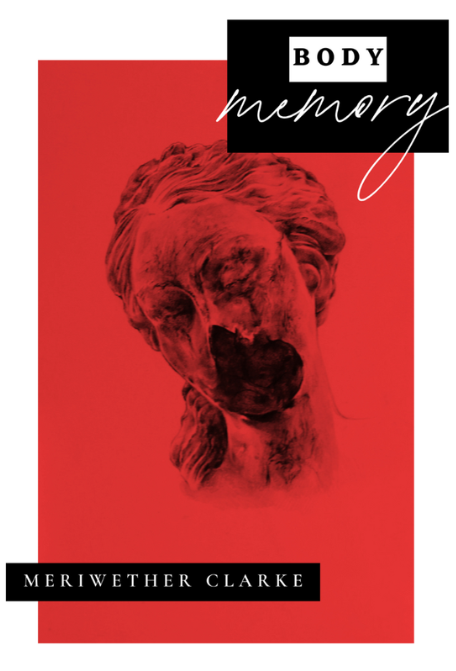
Body Memory, poet Meriwether Clarke’s first full-length publication, does a stellar job not only in its execution, but in its portrayal of the lives of women and what many of them must endure every day. The book consists of a number of poems, all divided into three distinct parts. These three parts detail not only the harmful effects of misogyny and the dehumanization that it causes but also the act of overcoming such things and seeking out connection and identity despite everything else. Above all, this collection focuses on remembrance. It is about looking into the past and doing your best to acknowledge how it shapes you but not letting it entirely define you.
These poems are especially effective because despite taking place across different timelines, they can easily be connected to each other through not only a common theme, but also the shared voice of womanhood. They could all be from the perspective of one person’s life, or they could each be separate, self-contained stories about different people. This effect unites the poems and still allows them to shine individually. It is up to the reader to decide how they want to read this collection.
Another common thread is the focus on the natural and the man-made world. Alongside the allusions to the bodies of women and what they are constantly subjected to, there exists imagery of orange trees and mountains and cities and their sidewalks. In “Oranges,” the second poem, the title fruit brings the speaker back to their childhood and the orange tree that was in Mimi’s (another name for a grandmother) backyard. They loved picking the fruits and smelling orange on their hands but hated actually having to eat the fruit that they picked. This poem is like a bittersweet snapshot into childhood. It is a reminder of simpler times, where the only thing you had to worry about were oranges. Even amid this sweet imagery, the speaker still feels the need to point out that her “chest still looked flat.” This implies that while it may be irrelevant at this moment, it will become important later on. Although this is a time of innocence, there is still this consciousness of the body.
This kind of wonder makes the poems that come after, like “Rug Burn,” even more tragic and disgusting. The speaker is only thirteen here when an older man dangles his hands near her breasts while she is reading in a bookstore basement. The most powerful part about this poem is that it is gross, plain and simple. The visceral disgust that comes from this poem is palpable. As an adult, the stranger should not be taking advantage of the situation, but he does anyway. The speaker’s breasts and clothes were still hers, and the creep should have minded his business and left her alone. In the end, the speaker is the only one who suffers from the consequences of his actions.
Another phenomenal poem for its portrayal of this collection’s message is “Body Memory,” the title poem, which does not appear until much later in the book. In this phenomenal piece, the speaker is lying in bed, but instead of the speaker as they are now it is the version of themselves before puberty and before “men started honking.” The speaker is emotional about this visual. To them, it is a reminder of what she once was, and how she mourns the loss of this version of herself she now realizes is precious. She is quite literally remembering her body in a way she couldn’t have when she was that young girl. She did not realize before how lovely she had been in her youth until that loveliness and innocence were gone, which speaks volumes about the way society views women and girls today. It demands that girls grow up too fast and then have the audacity to mourn what once was. This time, however, the mourning has meaning because it is the speaker’s grief, not someone else looking in on her life and feeling sad about it.
Overall, the poems of Body Memory masterfully tell of the horrors of being a woman and how that ever-present fear affects women all throughout their lives. There is innocence, then a loss of innocence over the course of these poems. However, the speaker or speakers show time and time again that through it all they are survivors. Despite everything, you must persist. Despite everything, you must remember so that you can move forward. If you do not persist, the men who put that fear in you win.

