Author Archives: cocchiarale

The Allure of the Supernatural

By Katherine Abissi

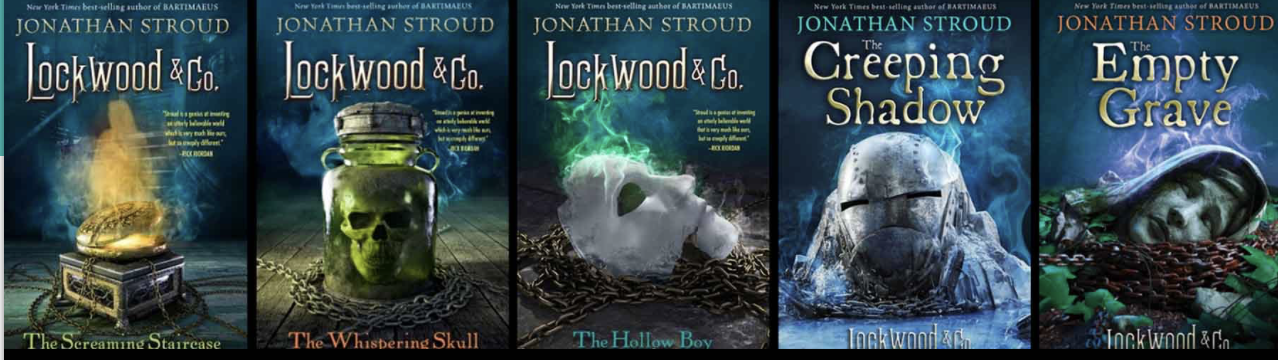
If you like mystery that’s a bit out of this world, you should seek out Lockwood & Co., a five-book supernatural mystery series written by Jonathan Stroud. The series is written in first person perspective and follows Lucy Carlyle, a teenage agent who fights alongside her coworkers, George Cubbins and Anthony Lockwood, to protect their society from ghost attacks. Stroud has turned the ambiguity of the afterlife into a concrete construct which plagues the living, especially children. These children have the talents of sight, hearing, touch, and research, which they use to detect and fight ghosts who materialize at night to terrorize the living. After an accident in her hometown, Lucy hastily joins Lockwood & Company, an independent ghost fighting agency. Together, Lucy, Lockwood, and George solve many mysterious cases and fight dangerous ghosts while hunting for the cause of the hauntings.

In each, Stroud follows a similar structure: the hook, the background, the main mystery, the final battle, and the twist. Like many authors, Stroud’s hook tends to be a battle with a ghost or multiple ghosts. After the attention-getting opening, he provides the reader with background information about where and what the characters have been doing. Next, the main mystery is introduced and developed throughout the book, often interwoven with other cases. During the action-packed finale, a twist is revealed in dramatic fashion. The cards are down, and the chips are out; the agents of Lockwood & Co. never falter and bravely rally to success. The structure Stroud creates captivates the readers, making the series quite addicting. The unique world Stroud has created is colored by the affable qualities of the characters of Lockwood, Lucy, and George, whose found family dynamic adds a wonderful layer to the story.

The Lockwood & Co. series has been adapted into a TV show by Netflix and recently celebrated its two-year anniversary. The show, which stars Ruby Stokes, Cameron Chapman, and Ali Hadji-Heshmati, has one season that covers the events of the first two books, The Screaming Staircase and The Whispering Skull. While the series was well received, Netflix cancelled it after its pilot season. Fortunately, Stroud’s addicting books continue to be sold in stores and online.

A Post About The Picture

by Katherine Abissi

“Art has no influence upon action. It annihilates the desire to act. It is superbly sterile. The books the world calls immoral are books that show the world its shame.” –Oscar Wilde

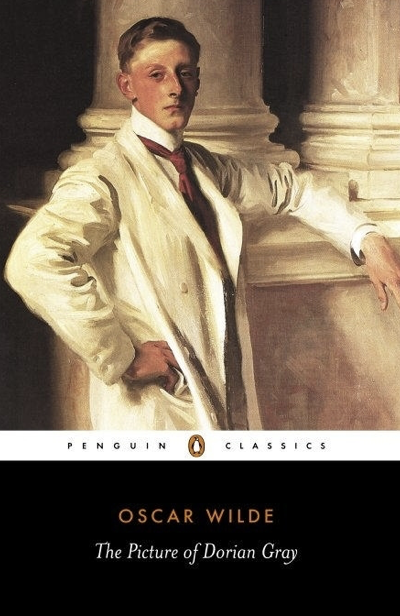
In the classic novel, The Picture of Dorian Gray, Oscar Wilde explores the themes of morality and vanity in a coming-of-age story that sours due to the corruption of the main character. The novel opens with Dorian Gray as a naïve and vain young man who, under the influence of a man called Lord Henry Wotton, is taught to value nothing other than beauty and pleasure. The story serves as a cautionary tale to not be consumed by passion or pleasure. To not, in other words, forsake morality for a quick serotonin hit. Terrified of what will happen when he grows older and loses his looks, he is able to remain looking the same while his portrait ages and decays instead. At the same time, though, he is imprisoned by his beauty.

In the censored version, published in 1891, it is not clear why this happens. in adaptations such as the 2009 movie titled Dorian Gray, it is implied that Dorian made a deal with the devil. The lack of a clear explanation makes the reader curious if not simply confused. The ambiguity seems to suggest the underlying message that, under certain influences, anyone could succumb to immorality and horrors as Dorian did. In this way, Dorian can be seen as a mirror of the reader. The novel is a cautionary tale to not nurture immorality and vanity as Dorian does throughout the book. In the end, Wilde delivers poetic justice through his symbolism of having Dorian die by his own hand. Throughout the book Dorian has been wrecking his life and the lives of others through his apathy and cruelty. In a moment of hysteria, Dorian seeks repentance by stabbing his portrait, paralleling the self-sabotaging cycle he has trapped himself in by valuing nothing but vapid pleasure.

Oscar Wilde’s vivid writing style powerfully depicts the self-destruction, immorality, and vapidness of his protagonist. Wilde’s masterful story telling allows his novel, The Picture of Dorian Gray, to transcend time periods. Readers and writers today can learn much from this highly regarded work.

Immersive Theater at Widener University

By Maura O’Brien

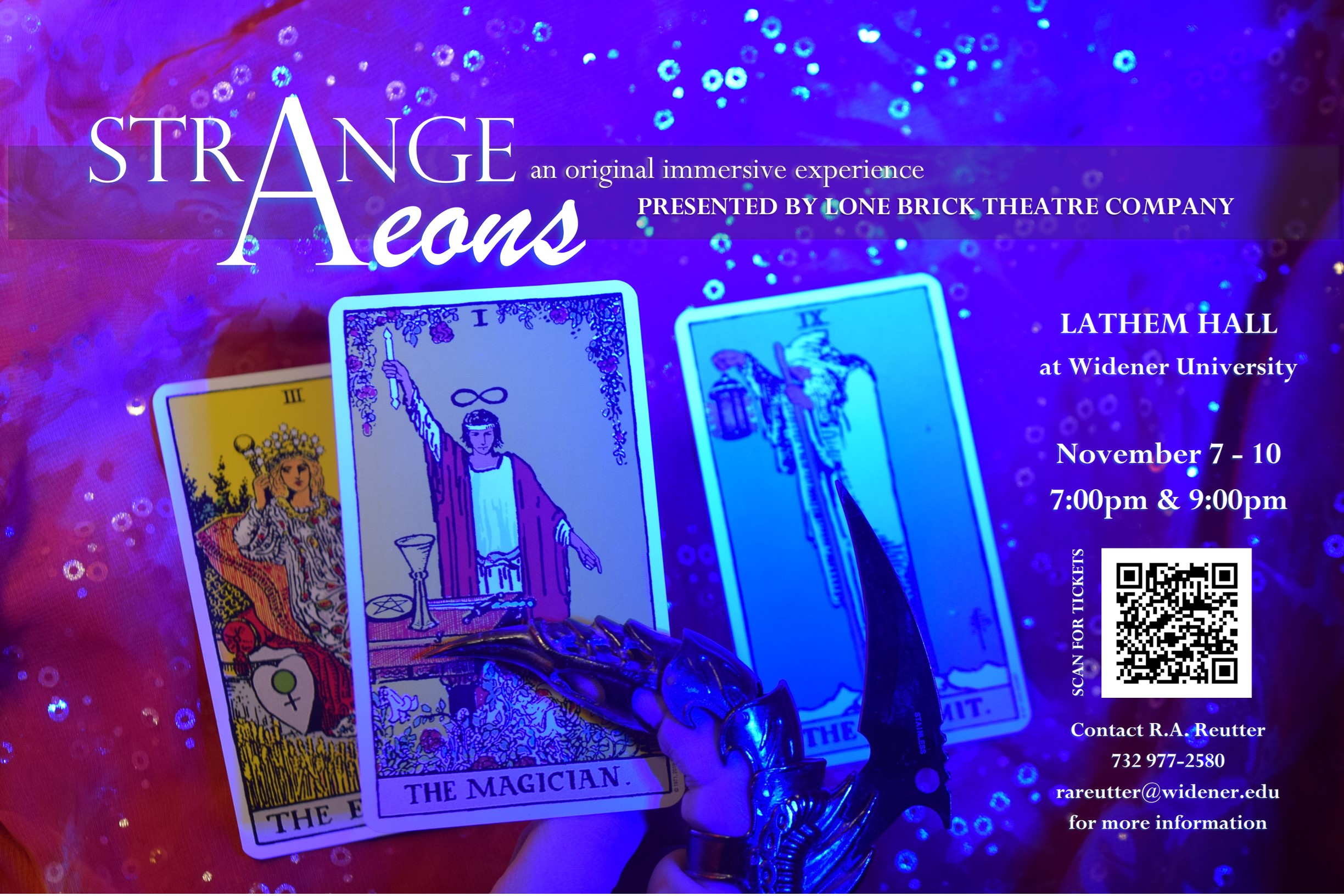
I recently attended a performance of the play Strange Aeons at Widener University. I was especially excited because I knew absolutely nothing about it except for some posters hung up around campus decorated in clocks and tarot cards and what my friend in the play had told me. I was essentially going in with no idea what to expect.

I made my way over to Lathem Hall a little early so that I could get a good seat. It was there that I found out that there were no seats. The show was interactive, which meant the audience would be moving throughout the different sets the entire time. There were three different paths that we could choose to follow: the path of the Hermit, the path of the Empress, and the path of the Magician. I chose the path of the Magician, because that sounded like the most fun to me. Once everyone was assigned a group the doors opened and the show began.

Regardless of the path taken, attendees made a bargain with someone called the Emperor. The Magician wanted to bring her sister back from the dead, but in making the deal her memories were stolen from her. There were a lot of things happening at once, which made for a very chaotic but fun experience. On the Magician track, we received lemonade, watched someone try to summon a ghost, attended a tea party, and at the end watched all three of the paths meet their fate.

Overall, I would say it was a unique experience, and something that I would absolutely do again if given the chance.

’Tis the Spooky Season

by Abigail Grossman

People get together to enjoy a range of autumn festivities every year. One of the most enduring activities is the sharing of spooky stories. Who has not gathered around a fire with family and friends to share terrifying tales of ghosts and ghouls?

With Halloween close at hand, if you’re looking for a perfect scary story to tell, look no further than Edgar Allan Poe, one of the all-time best writers of horror. “The Black Cat,” one of his most famous works, was published in 1843. From his jail cell, the narrator recounts his descent into madness. As the story progresses, they reveal how they were caught for the devious crimes that landed them in prison. Although it may seem like a simple tale of a criminal’s lament, the story is much more complex. Poe includes elements of murder, mystery, and even magic, leaving readers on the edge of their seats with every line. For these reasons and more, “The Black Cat” makes for the perfect spooky story to share with loved ones this Halloween.

That said, there are many other horror tales by Poe that are worth sharing as well, including “The Cask of Amontillado” and “The Tell-Tale Heart.” Read these tales at your own risk, though, because they will be sure to haunt you!

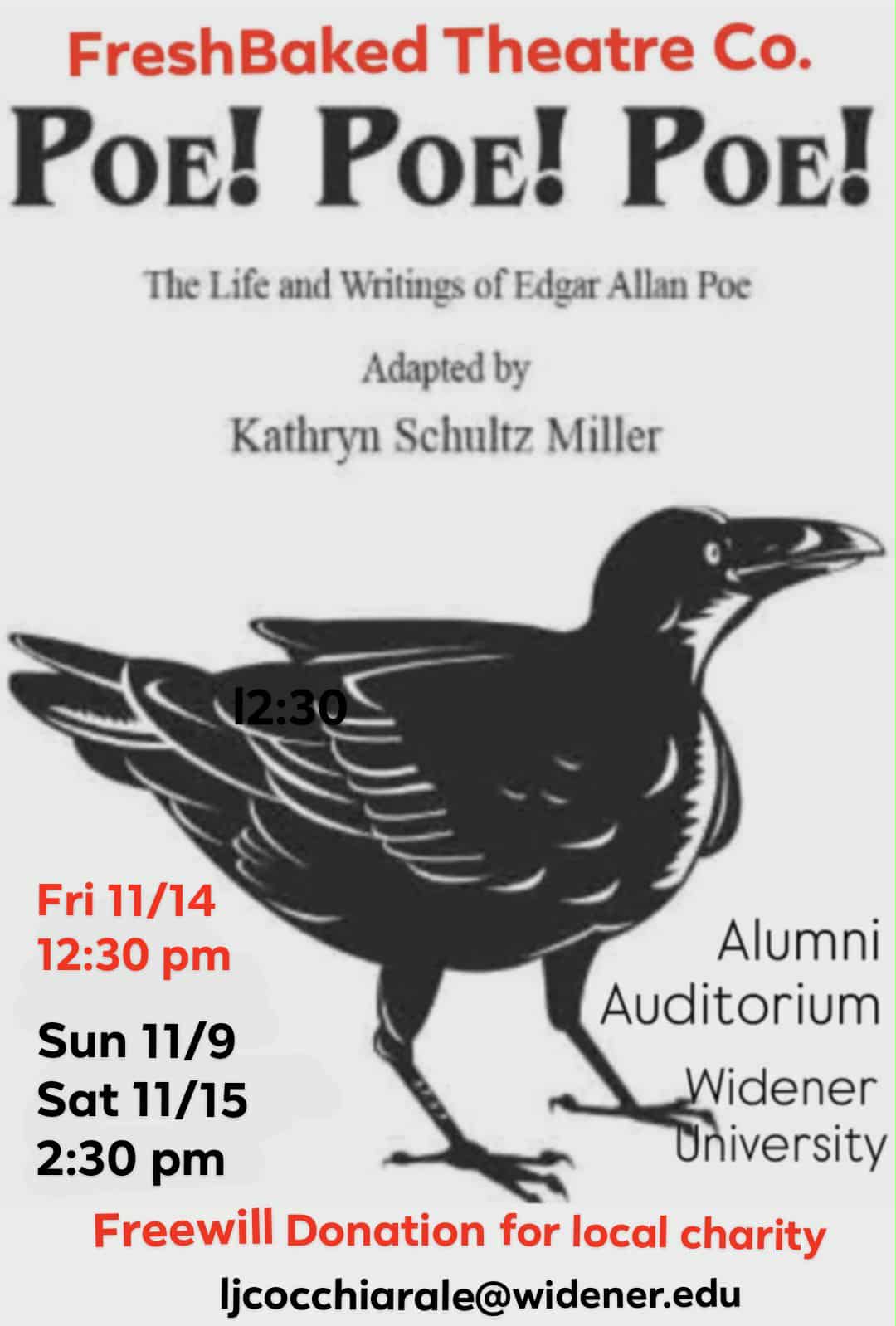
On a related note, our university’s very own FreshBaked Theatre Company is performing Poe! Poe! Poe!, a play by Kathryn Schultz Miller. Public shows are on November 9th and 15th in the Alumni Auditorium on Widener’s main campus. The production is free to attend, but any donations will support charity groups in Chester, Pennsylvania. Quoth the raven: “We hope to see you there!”

Submission Period Extended to November 30

Good news!: You don’t need to rush. The deadline for the next issue of The Blue Route has been extended to November 30. If you are an undergraduate student, send us your best poetry and prose for consideration. For more information, please see our submission guidelines.

Poet Kenneth Pobo Comes Home to Widener

By Laura Polaski

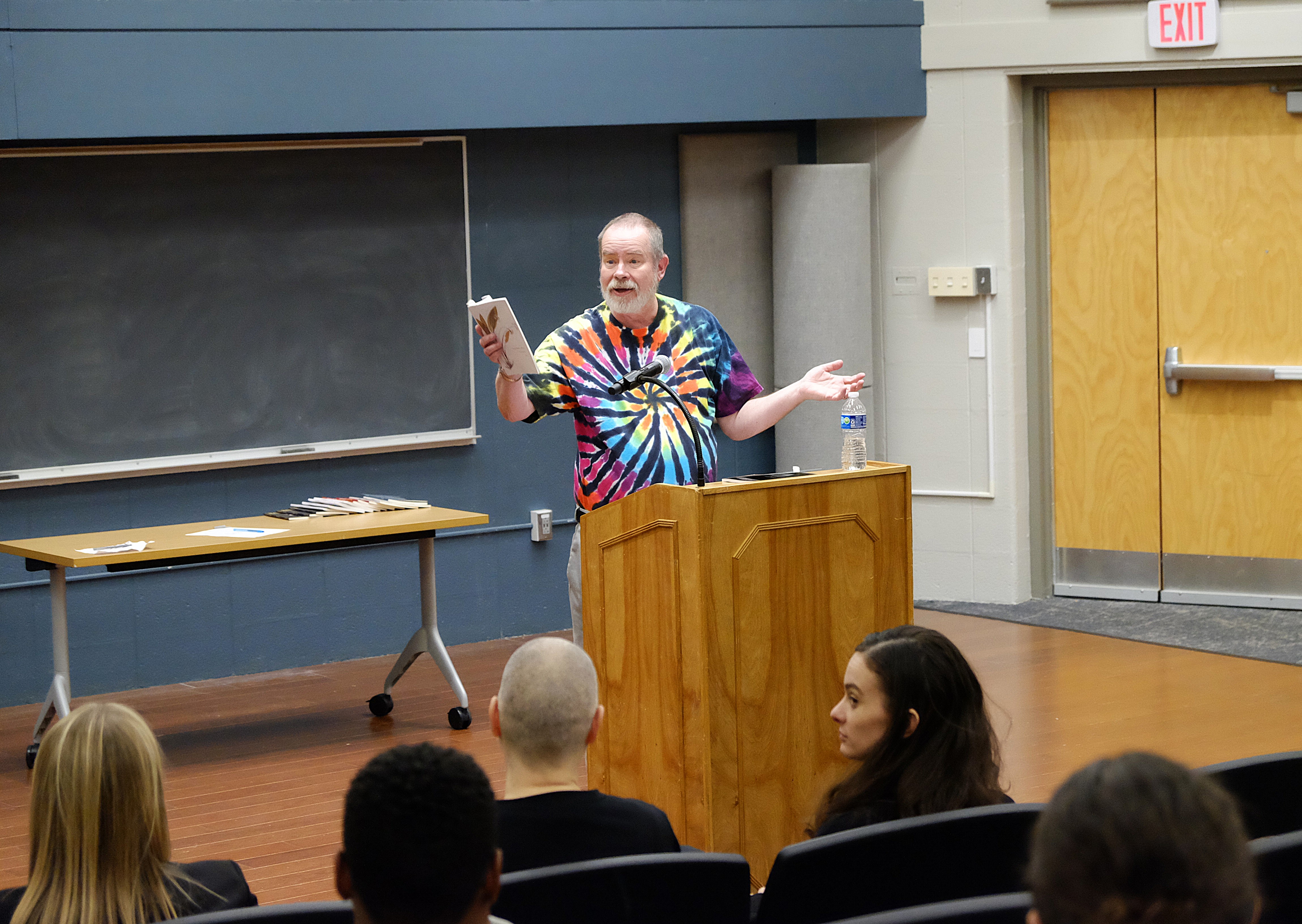
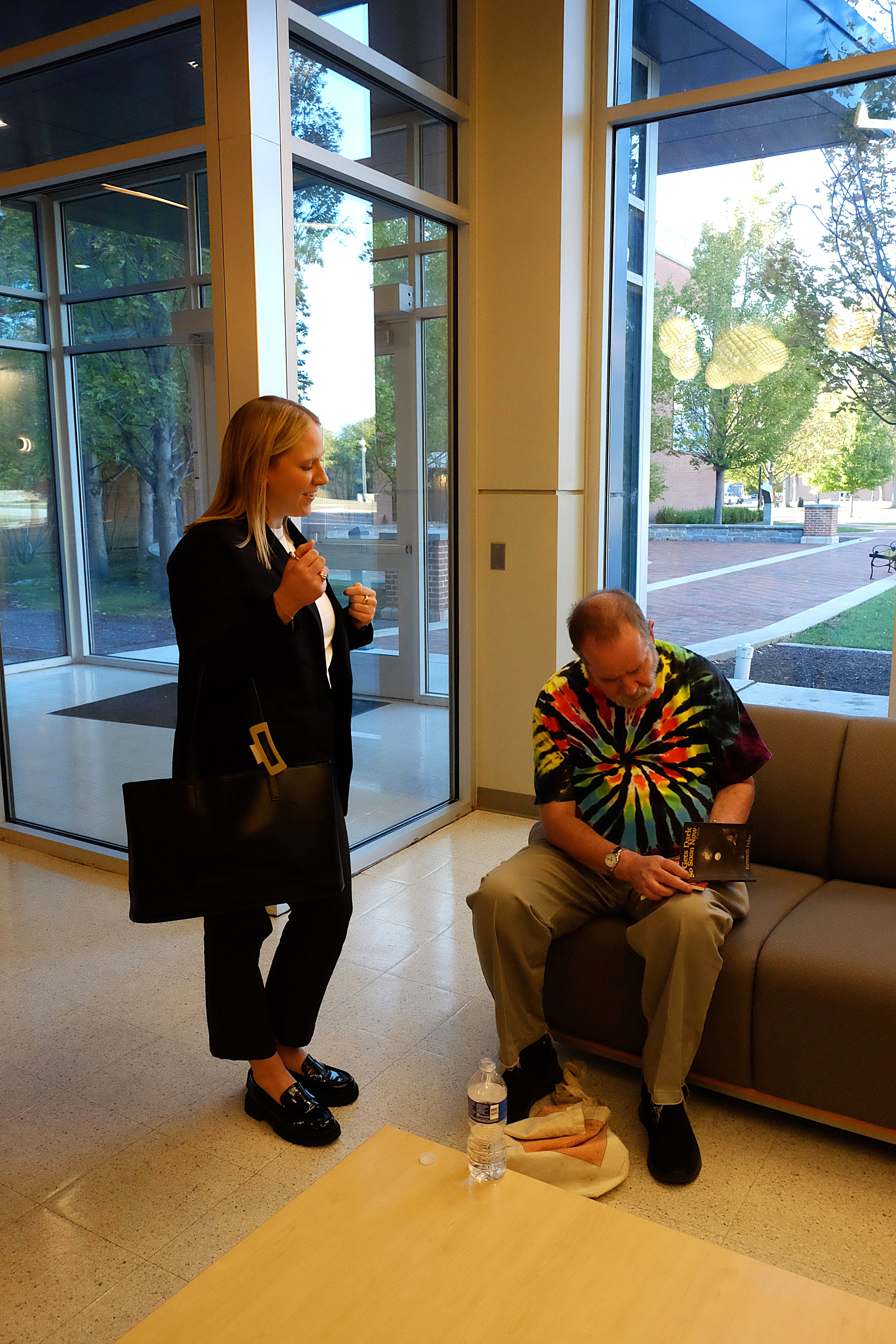
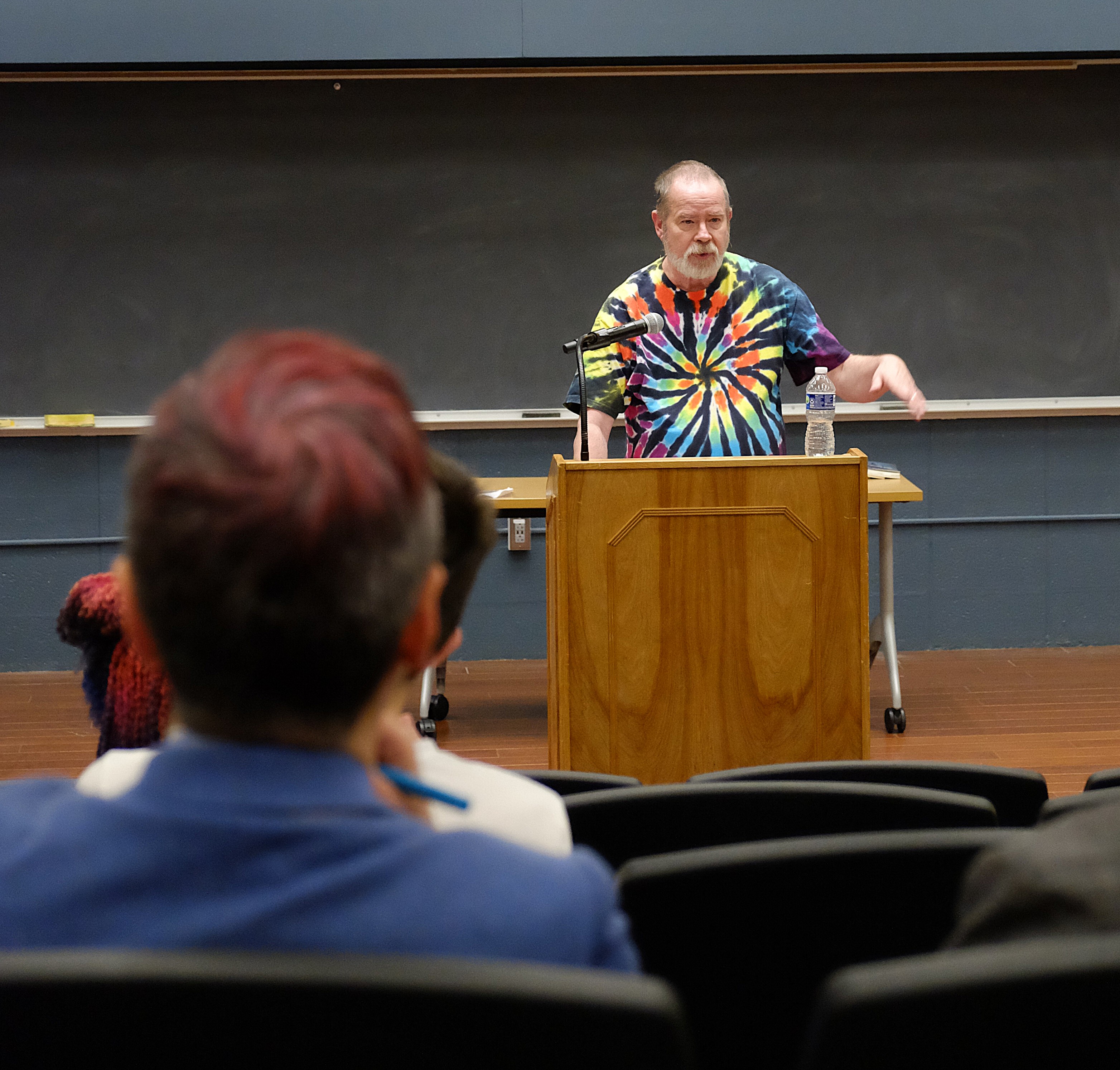
Last week, Widener University welcomed award-winning poet and former creative writing professor Kenneth Pobo back to campus as this semester’s visiting writer. Dr. Pobo met and spoke with students and ended his visit by giving a reading of some of his poetry and flash fiction pieces. Before the reading, I had the opportunity to talk to him about his work and his advice for writers. 

Dr. Pobo primarily writes poetry, which influences all of the work that he does. Even when he is writing flash fiction, he incorporates imagery and figurative language that bring the story to life. Most of his poetry is written in free verse, but he also enjoys writing villanelles, sonnets, ghazals, and triolets. Since each of these styles has a specific structure, he describes the challenge of writing them as a “puzzle.” Dr. Pobo views writing flash as similar to free verse poetry, in the sense that it is another opportunity to work with less structure, without having to consider the impact of line breaks, which allows him to write “a more elastic kind of line.” He also enjoys the immediacy of writing flash, as he has to make something happen quickly with such a limited word count.  

For aspiring writers, Dr. Pobo says that “there’s no substitute for getting your butt in the chair.” If you ever sit down and want to write but nothing is coming, he says to take a break and get out of the chair but always make sure to come back to it later. All it takes, according to Dr. Pobo, is just one line or one piece of dialogue that can help push you forward. He also acknowledges how easy it is for young writers to get discouraged and feel like others can do better work than them, and he admits that he feels it sometimes, as well. To get around this, he recommends thinking about how no one else has the same perspective as you; you can put your own stamp on your work that no one else can. He also advises against worrying too much about the future, because “the future takes care of itself.” All you need to do is write your poem or story. Another thing that he believes will help is building a community by meeting other writers and learning about their challenges. For editing, Dr. Pobo recommends reading your work aloud, because your ears will catch things that your eyes miss after reading over your work so many times, such as using the same word too close together. 

Some of Dr. Pobo’s favorite poets include Tomas Tranströmer, Emily Dickinson, Walt Whitman, and Theodore Roethke, but he also emphasizes the importance of reading contemporary poetry, as well as outside our own culture. He believes that the more you read different perspectives and different styles, the “wider our voice can become.” For him, it is an honor to write poetry to remember all of the voices that came before him and those that have had their voices oppressed, and he believes that it is important for writers to have that sense of honor and humility with their own work.  

Submission Window Opens Sept. 15

Attention undergraduate writers! Hope you all had a wonderful summer. The Blue Route editors would like you to know that we’ll open for submissions from September 15 to November 15. If you have some previously unpublished poetry and/or prose, we’d love to take a look. For more information, please see our submission guidelines

PRESENTING ISSUE #30

Issue #30 of The Blue Route is here! The issue features amazing work from undergraduate poetry and prose makers at Harvard University, the University of Georgia, Portland State University, the University of Southern California, the University of Central Florida, Swarthmore College, and Salisbury University. Many thanks to our contributors and readers!

We’ll be open for submissions again on September 15.

National Science Fiction Day

Happy New Year, everyone! The Blue Route staff is on break right now, but we wanted to take a moment to recognize National Science Fiction Day, which is today. The genre, as many of you know, has many standout authors, such as Ray Bradbury, Octavia Butler, Isaac Asimov, and Nnedi Okorafor. These and other writers have penned many fascinating novels and short stories.

There are some writers, though, who paint on a much smaller canvas–the canvas of flash fiction. If you’d like to celebrate Science Fiction Day, but you don’t have the time to crack open a novel or collection of stories, check out the strange, super-short piece linked below. You won’t be disappointed, but you may never look at yogurt the same way again.

Deadline for Submissions Approaching

The submission window for the Spring 25 issue of The Blue Route will be closing on November 15. Submissions are rolling in, but we’d love to read even more poetry and prose by undergraduate writers. Please read the submission guidelines for more information. If you’d like to submit but are currently facing writer’s block, check out these excellent writing prompts from Poets & Writers magazine:

https://www.pw.org/writing-prompts-exercises